5 Key Steps to Understand Amazonian Mushroom Identity and History
· based on the channel Shroomverse
The Amazonian mushroom is a term commonly used for certain psychedelic mushrooms native to the Amazon rainforest. Understanding the identity and scientific history behind this name requires tracing the original botanical descriptions and specimen records. This article presents five key steps to grasp the true background and taxonomy of the Amazonian mushroom.
1. Recognizing the Amazonian Mushroom as a Psychedelic Species
The Amazonian mushroom typically refers to psilocybin-containing mushrooms found in the Amazon basin, known for their psychoactive properties. Commonly associated species include Psilocybe cubensis and others native to the region, though the exact species behind the "Amazonian" label has been debated 02:15. These mushrooms have cultural and ethnobotanical significance among indigenous peoples.
2. Tracing the Scientific Naming and Paper Trail
The name "Amazonian mushroom" does not correspond to a single species but rather a group, which has led to taxonomic confusion. The original scientific papers and herbarium specimens are essential for understanding which species were first collected and described. The earliest documentation often stems from 20th-century mycological expeditions into the Amazon, where samples were collected and later described in academic journals 04:40.
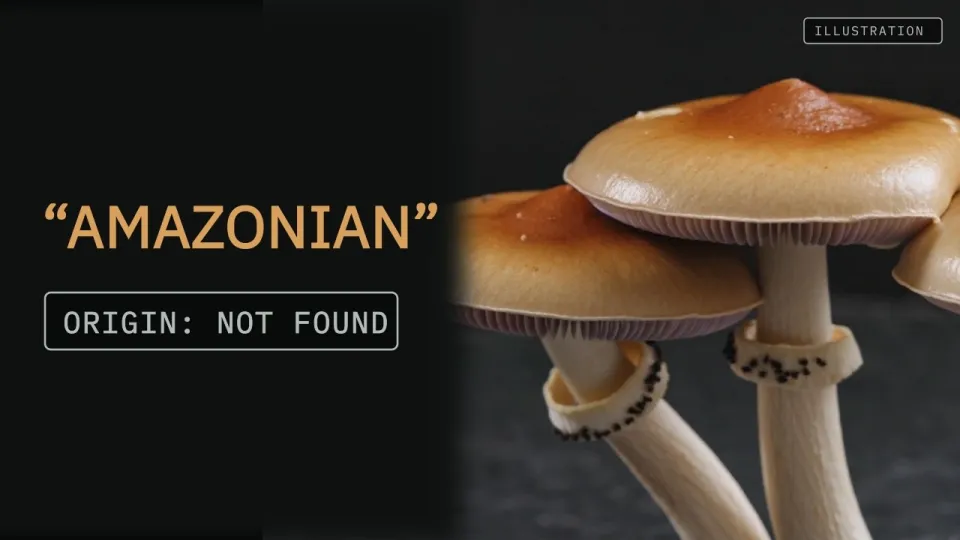
Video: Amazonian Mushroom: Following the Paper Trail Behind the Name
3. Examining Herbarium Specimens and Type Collections
Herbarium specimens serve as the physical evidence for species descriptions. By reviewing the type specimens related to Amazonian mushrooms, researchers can verify species identity and correct mislabeling. These specimens help clarify whether the Amazonian mushroom corresponds to Psilocybe cubensis, Psilocybe amazonicus, or other species, resolving long-standing ambiguities 06:50.
4. Understanding Taxonomic Challenges and Synonymy
Taxonomic challenges arise from morphological similarities among species and inconsistent naming in early literature. Synonymy, where different names refer to the same species, is common. The paper trail reveals cases where the Amazonian mushroom has been synonymized with other Psilocybe species, highlighting the need for molecular analysis to confirm relationships 09:30.
5. The Role of Modern Research and Molecular Techniques
Recent advances in DNA sequencing and molecular taxonomy have helped clarify the identity of Amazonian mushrooms. Genetic studies complement the historical paper trail by providing definitive species boundaries and evolutionary relationships. Modern research continues to update the taxonomy, ensuring that the term "Amazonian mushroom" reflects scientifically accurate classifications 11:45.
Conclusion
Understanding the Amazonian mushroom involves following a complex paper trail of scientific descriptions, herbarium specimens, and taxonomic revisions. By combining historical research with modern molecular techniques, mycologists can clarify the identity behind the name and correct past inconsistencies. The video by Shroomverse offers an insightful analysis of this process, emphasizing the importance of thorough documentation and research in mycology 14:00.
Key takeaways
- Amazonian mushroom refers to a group of psychedelic mushrooms from the Amazon basin.
- The name's origin is linked to early scientific papers and specimen collections.
- Confusion exists due to multiple species and naming inconsistencies.
- Historical botanical records help clarify the mushroom's taxonomy.
- Shroomverse video analyzes the paper trail behind the Amazonian mushroom name.
Source: Amazonian Mushroom: Following the Paper Trail Behind the Name · Markdown version
Questions & answers
What species does the term Amazonian mushroom refer to?
The term commonly refers to psychedelic mushrooms from the Amazon basin, including species like Psilocybe cubensis and others, but it is not exclusive to a single species.
Why is there confusion about the Amazonian mushroom's scientific name?
Confusion arises due to multiple similar species, inconsistent naming in early research, and synonymy, which means different names have been used for the same species.
How do herbarium specimens help clarify the Amazonian mushroom's identity?
Herbarium specimens act as physical references for species descriptions, allowing researchers to verify identities and correct mislabeling based on original type collections.
What role does modern molecular research play in identifying Amazonian mushrooms?
Molecular techniques like DNA sequencing provide definitive evidence of species boundaries and relationships, helping to resolve taxonomic ambiguities that historical research alone cannot.